November 2 2026

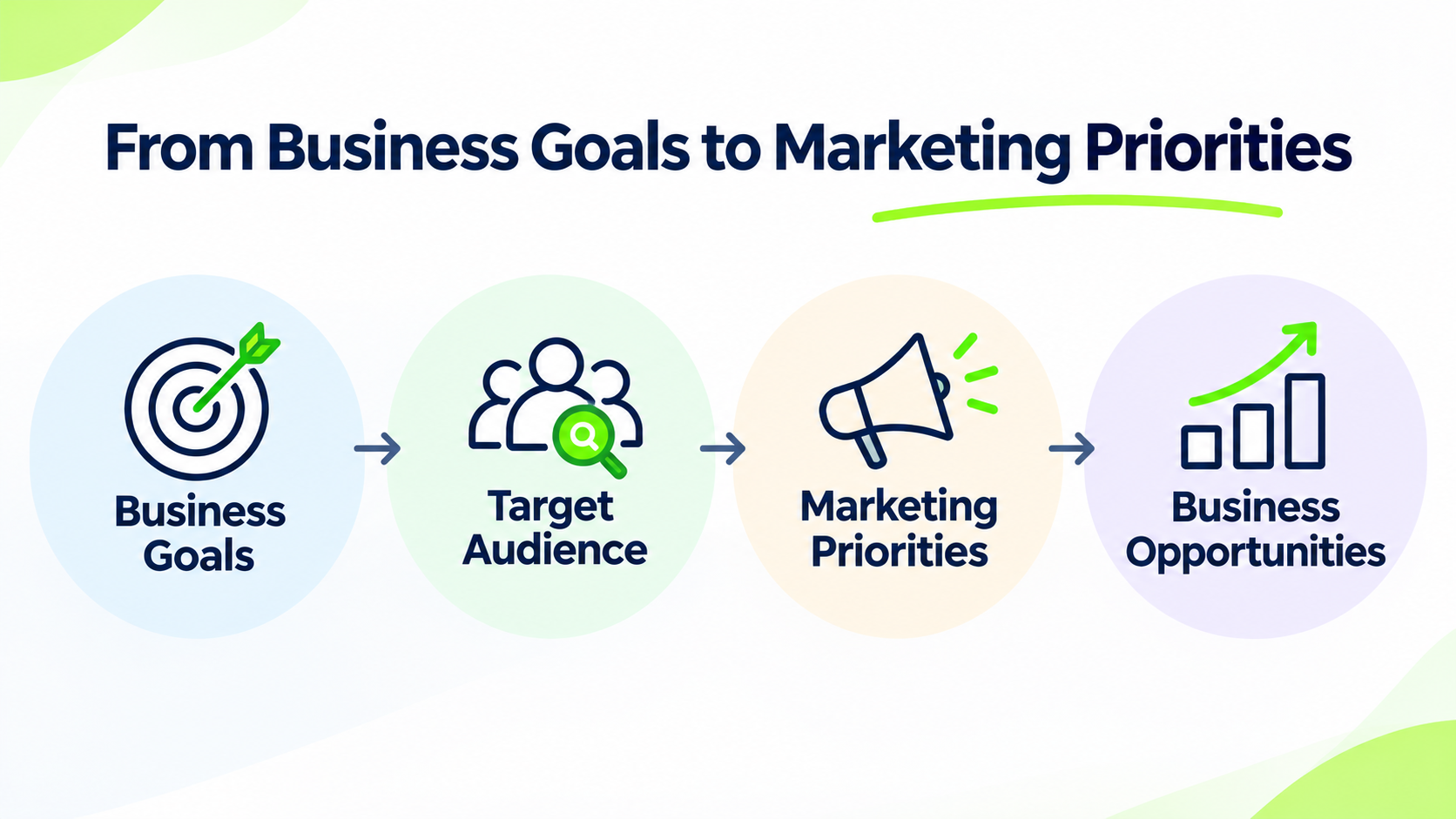
As 2026 comes to an end, many businesses are reviewing their performance, setting targets and identifying opportunities for the year ahead. Yet one important question often remains: Is your marketing strategy prepared to support what your business wants to achieve in 2027?
Perhaps you’re planning to expand into new markets, attract a different type of customer or generate more consistent business enquiries. Whatever your priorities, achieving them requires more than continuing the same marketing activities from the previous year.
Planning your 2027 marketing before the year begins helps turn business objectives into clear priorities, coordinated activities and measurable outcomes. From strengthening your online presence and building credibility to improving lead generation and customer communication, each activity should have a defined purpose.
A marketing plan should do more than outline what your business intends to publish or promote throughout the year.
It should explain how marketing will contribute to the outcomes that matter to your business.
For one company, the priority might be generating more enquiries from potential customers. For another, it could be entering a new market, attracting larger projects, strengthening relationships with existing clients or becoming more visible to particular decision-makers.
Consider a construction business looking to secure more commercial projects in 2027. Publishing regular project updates might improve its online presence, but that activity becomes more valuable when it is connected to a clear objective.
The business could use completed projects to demonstrate its capabilities, strengthen its website content, build credibility with property developers and support targeted LinkedIn conversations with potential clients.
The marketing activity remains relatively straightforward, but its purpose becomes much clearer.
Before deciding which channels or campaigns to invest in, consider three questions:
These questions provide the foundation for a marketing strategy that supports business growth rather than simply producing more marketing activity.
Rather than starting with a long list of marketing trends or new platforms, focus on the areas most likely to influence how potential customers find, evaluate and engage with your business.
1. Review Your Current Marketing Performance
Before investing in new activities, understand what your existing marketing is contributing.
Look beyond how many people viewed your website or interacted with your social media content.
Consider where enquiries are coming from, which services attract interest, whether your website encourages visitors to make contact and which marketing activities support sales conversations.
It is also worth reviewing the quality of the opportunities generated. Your review does not need to be complicated. Start with the information already available through your website, CRM, email campaigns, sales records and customer conversations.
Identify what deserves continued investment, what needs improvement and what may no longer be a priority.
2. Make Your Business Easier to Find and Understand
Customers increasingly encounter businesses through different digital touchpoints before making an enquiry.
They might find your website through a search engine, see a project update on LinkedIn, receive a recommendation or discover your company while researching potential suppliers.
Whatever the starting point, your online presence should help them quickly understand:
For 2027, this means reviewing more than the appearance of your website.
Consider whether your service pages reflect your current capabilities, whether your business information is consistent and whether prospective customers can find relevant examples of your work.
Search visibility also deserves attention. As people use both traditional search engines and AI-powered tools to research businesses and services, clear, accurate and useful website content becomes an important part of digital discoverability.
A business that has expanded into new services or markets may be missing opportunities simply because its online presence still reflects an earlier stage of its development.
3. Turn Your Expertise Into Evidence Customers Can Trust
Customers need confidence before they commit to a new supplier, service provider or business relationship.
Marketing can help build that confidence by making your expertise more visible and easier to evaluate.
For businesses in construction, engineering, professional services and other specialised sectors, this could involve demonstrating completed projects, explaining technical capabilities, answering common customer questions or showing how your team approaches particular challenges.
The important distinction is between telling customers that your business is experienced and providing information that helps them understand that experience.
A project photograph, for example, can become more valuable when accompanied by an explanation of the work completed, the services delivered and the challenges addressed.
Similarly, an article answering a common customer question can support both search visibility and future sales conversations.
For 2027, consider which parts of your expertise are not yet clearly communicated and how they could become useful marketing and sales resources.
4. Build Lead Generation Into Your Marketing Activities
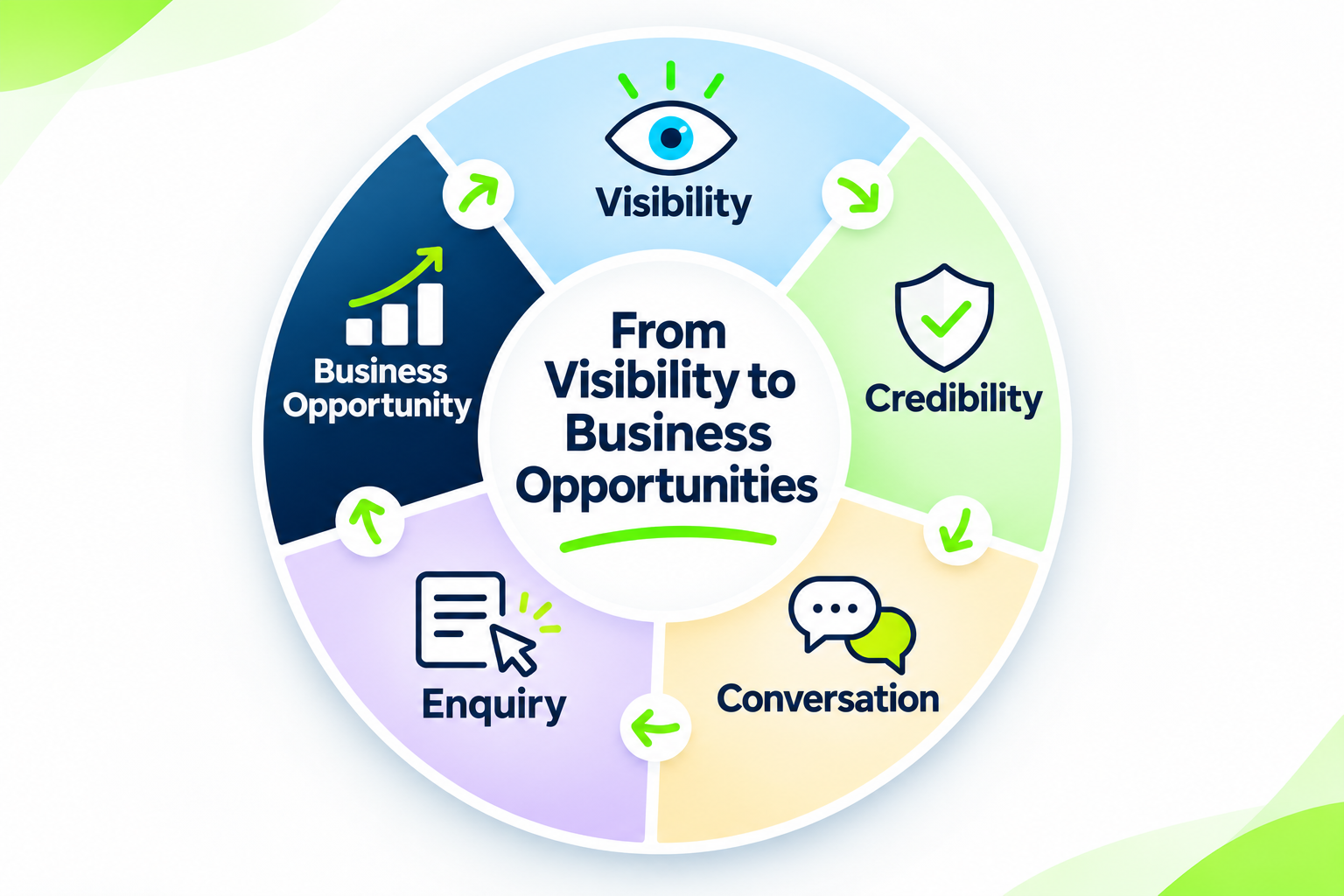
Visibility is important, but being seen is not the same as generating business opportunities.
Your marketing plan should consider how interested prospects move from discovering your business to starting a conversation.
That journey may involve several interactions.
A potential customer could first encounter your company through a LinkedIn post, visit your website to learn more, review a relevant case study and contact your team several weeks later.
Another might respond to a targeted outreach message because they already recognise your business and understand what you offer.
A practical lead generation approach connects visibility, credibility and communication with clear opportunities to engage.
Depending on your business, this might include:
Not every channel needs to be part of your strategy.
The priority is choosing activities that reach the right audience and create a clear route towards a relevant business conversation.
5. Strengthen Communication With Existing Customers and Prospects
New customer acquisition is only one part of marketing.
Your existing customers, previous enquiries and professional network may already represent valuable opportunities for continued engagement.
However, without a structured communication approach, those relationships can become dependent on occasional personal contact.
Email marketing, useful content, company updates and relevant follow-up communication can help your business remain visible to people who already know you.
For example, a company offering several related services might use a monthly newsletter to share practical advice, highlight capabilities and introduce services that existing customers may not yet be aware of.
A business with a longer sales cycle could use targeted follow-up content to answer common questions and help prospects evaluate their options.
The purpose is not to send more emails. It is to maintain useful communication that supports relationships and future business decisions.
Your 2027 plan should therefore consider how you will communicate with both new prospects and the people already connected to your business.
6. Decide Who Will Deliver the Marketing Plan
Even a well-developed marketing strategy has limited value without the resources to implement it.
For many SMEs, this is where marketing becomes difficult.
The business owner may understand the importance of marketing but have limited time to manage it. An internal employee might handle social media, website updates and customer communication alongside other responsibilities.
Alternatively, the business may have a small marketing team that needs additional expertise or execution capacity.
The answer is not always to recruit more employees.
Working with an external marketing partner can provide access to strategic planning, specialist capabilities and ongoing execution without requiring the business to build every function internally.
The most effective arrangement depends on what your team can realistically manage and where external support would add value.
There is no single model that suits every business.
Some companies have the internal resources to manage most marketing activities. Others need an external team to coordinate their strategy and execution. Many benefit from combining both approaches.
| Approach | When it may work best | Main consideration |
| Internal marketing team | Businesses with ongoing marketing needs, sufficient resources and established processes | Requires the right skills, capacity and management |
| External marketing partner | Businesses without a dedicated team or needing broader specialist support | Requires clear objectives, communication and accountability |
| Combined internal and external team | Businesses with some internal marketing capability but limited time or specialist expertise | Responsibilities and workflows need to be clearly defined |
For example, your internal team might provide industry knowledge, customer insights and project information, while an external partner manages content planning, campaign development, website improvements or lead generation activities.
This allows the business to retain its expertise and direction while gaining additional capacity to execute the plan.
The key is to treat marketing support as a working relationship connected to business objectives, rather than simply outsourcing individual tasks.
Marketing budgets should reflect your business objectives, the resources required and the activities most likely to support commercial outcomes.
Rather than distributing the budget equally across every channel, consider the role each investment will play.
| Investment area | Business purpose | What to evaluate |
| Website and SEO | Help relevant customers discover and evaluate your business | Relevant traffic, enquiries and search visibility |
| Content and case studies | Demonstrate expertise and support buying decisions | Engagement from target audiences and sales usefulness |
| LinkedIn and social selling | Build professional relationships and initiate conversations | Relevant connections, conversations and qualified opportunities |
| Paid advertising | Reach potential customers with specific needs | Lead quality, acquisition costs and conversions |
| Email marketing | Maintain relationships and support lead nurturing | Relevant responses, enquiries and re-engagement |
| Strategy and reporting | Keep marketing aligned with business priorities | Progress towards agreed commercial objectives |
A sensible budget should also allow for reviewing performance and adjusting priorities during the year.
If one activity consistently attracts suitable enquiries while another produces little commercial value, your plan should allow you to respond.
The objective is not simply to spend the marketing budget. It is to understand what the investment is helping the business achieve.
Marketing reports often focus on website traffic, impressions, reach and engagement.
These indicators can help explain whether people are encountering your business, but they do not provide the full picture.
For a business focused on growth, more meaningful questions include:
Where possible, connect marketing reporting with CRM information, enquiry records and sales feedback.
Not every business opportunity can be attributed to a single marketing interaction. However, reviewing these signals together can provide a more useful understanding of performance than relying on activity metrics alone.
Planning ahead does not mean you need to have every marketing decision finalised before January.
It means understanding where your business wants to go, what may be preventing progress and which activities deserve attention.
For businesses without a dedicated marketing department, or those with a small team managing competing priorities, external support can make the difference between having a marketing plan and consistently implementing it.
At Peak Profile, we work with businesses to connect marketing strategy with practical execution.
Whether you need support with your website, content, social media, LinkedIn lead generation, email marketing or broader digital marketing activities, our approach begins with understanding your business and the opportunities you want to develop.
We can work alongside your existing team or provide ongoing marketing support where internal resources are limited.
Before 2027 begins, take the opportunity to discuss what your marketing could achieve with a clearer direction and the right support.
Let’s discuss your business priorities for 2027, review your current marketing approach and explore where additional support could help.
Not sure where to begin? You can also request a free marketing audit to identify areas of your online presence that may need attention.
Ideally, businesses should begin reviewing their marketing priorities during the final quarter of 2026. This provides time to assess current performance, identify business objectives, allocate resources and prepare important activities before the new year. However, the plan should remain flexible enough to respond to changing business needs.
A practical marketing plan should identify business objectives, target customers, key messages, marketing channels, lead generation activities, budget, responsibilities and performance measures. It should also outline when activities will take place and how progress will be reviewed.
Not necessarily. Many small businesses can benefit from working with an external marketing partner who provides strategic guidance and execution support. The right arrangement depends on the business’s marketing requirements, available resources and internal capabilities.
Marketing can support lead generation by helping the right people discover your business, understand your capabilities and build confidence before making contact. Activities such as SEO, useful website content, LinkedIn outreach, paid advertising and email nurturing can create opportunities for relevant enquiries and business conversations.
An external marketing partner can provide additional expertise, capacity and continuity without requiring a business to manage every marketing function internally. A good working relationship should include clear objectives, defined responsibilities, regular communication and reporting connected to business outcomes.
Peak Profile is a Sydney-based digital marketing agency. The team works across social selling, LinkedIn lead generation, content, SEO, paid advertising, email marketing and broader marketing strategy, connecting marketing activity with meaningful business objectives.

 Social Selling & Lead Generation
 Growth Strategy & Peak Scorecard
 Paid Growth & Search Advertising
 Content Marketing
 Email Marketing & Automation
 Search & AI Visibility